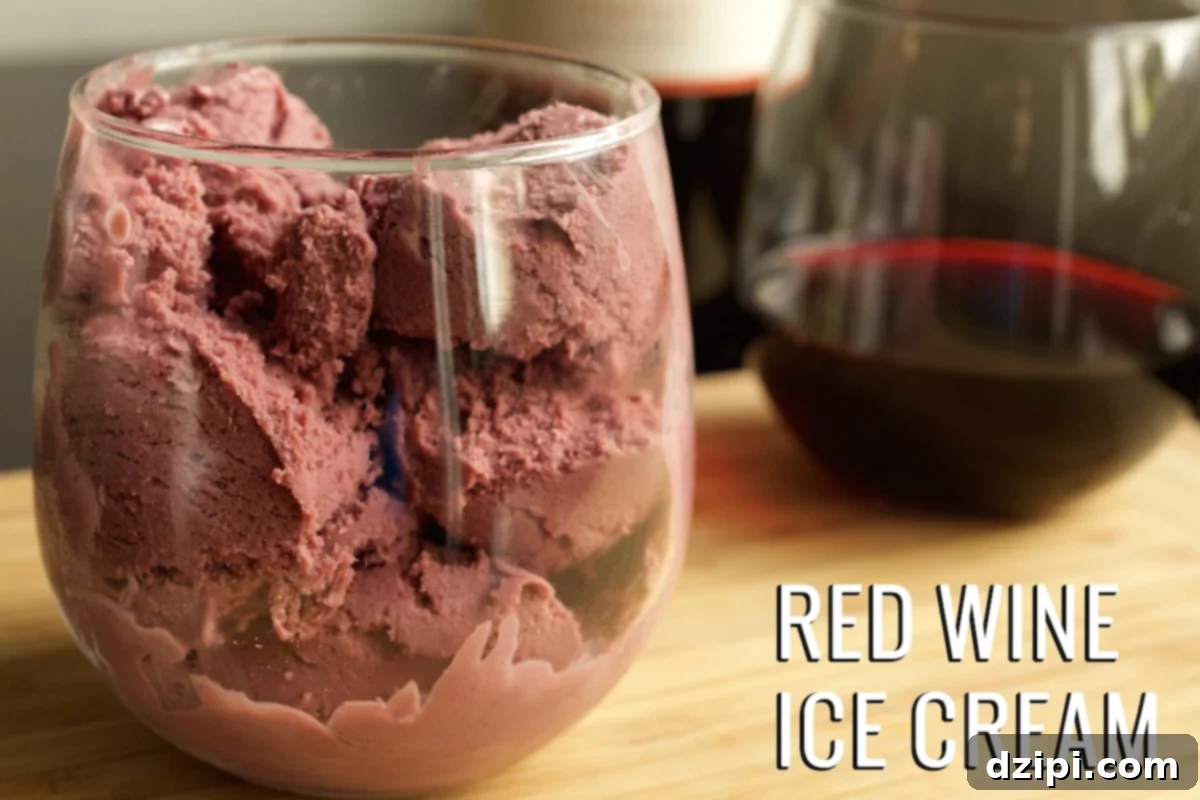
Indulge in Homemade Red Wine Ice Cream: A Sophisticated Dessert Recipe for Wine Lovers
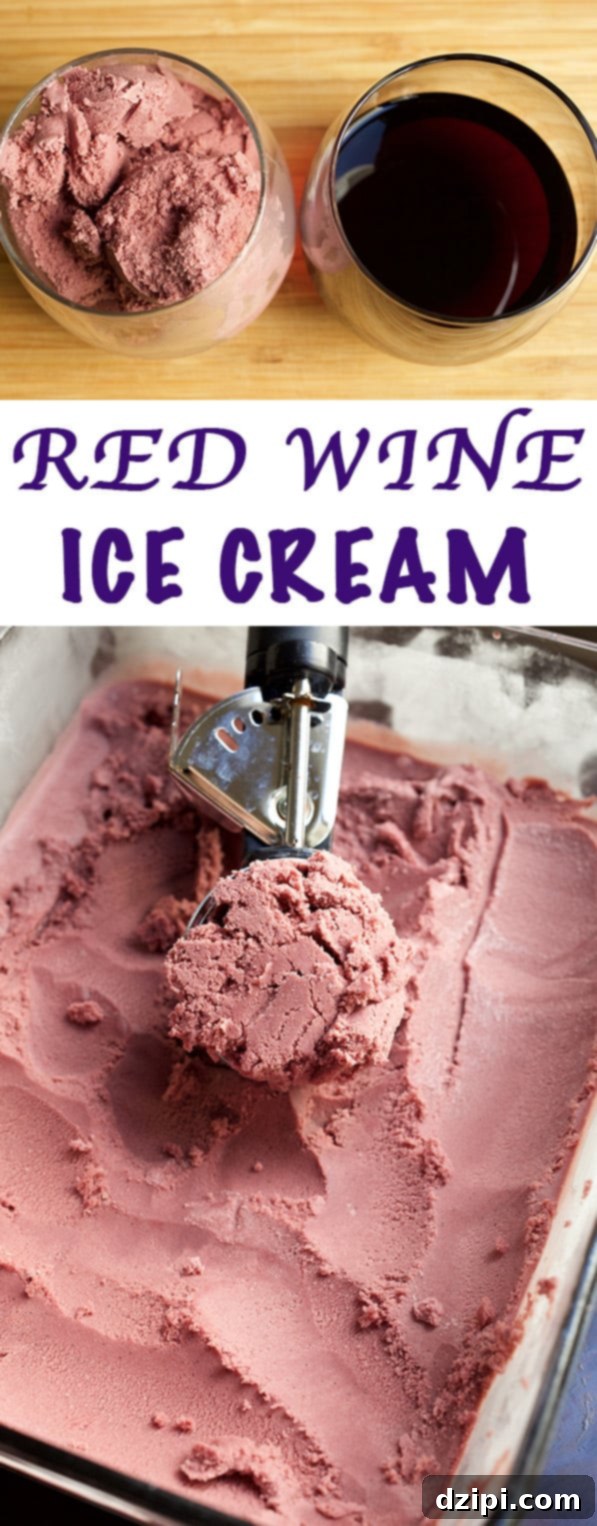
Imagine the rich, complex flavors of your favorite red wine transformed into a luscious, velvety ice cream. While some may turn water into wine, we’ve mastered the art of turning wine into an extraordinary dessert! This isn’t just any ice cream; it’s a culinary adventure that promises to delight your palate with a unique blend of creamy sweetness and a subtle, delightful wine tang. Prepare to impress your guests and treat yourself to a dessert experience unlike any other.
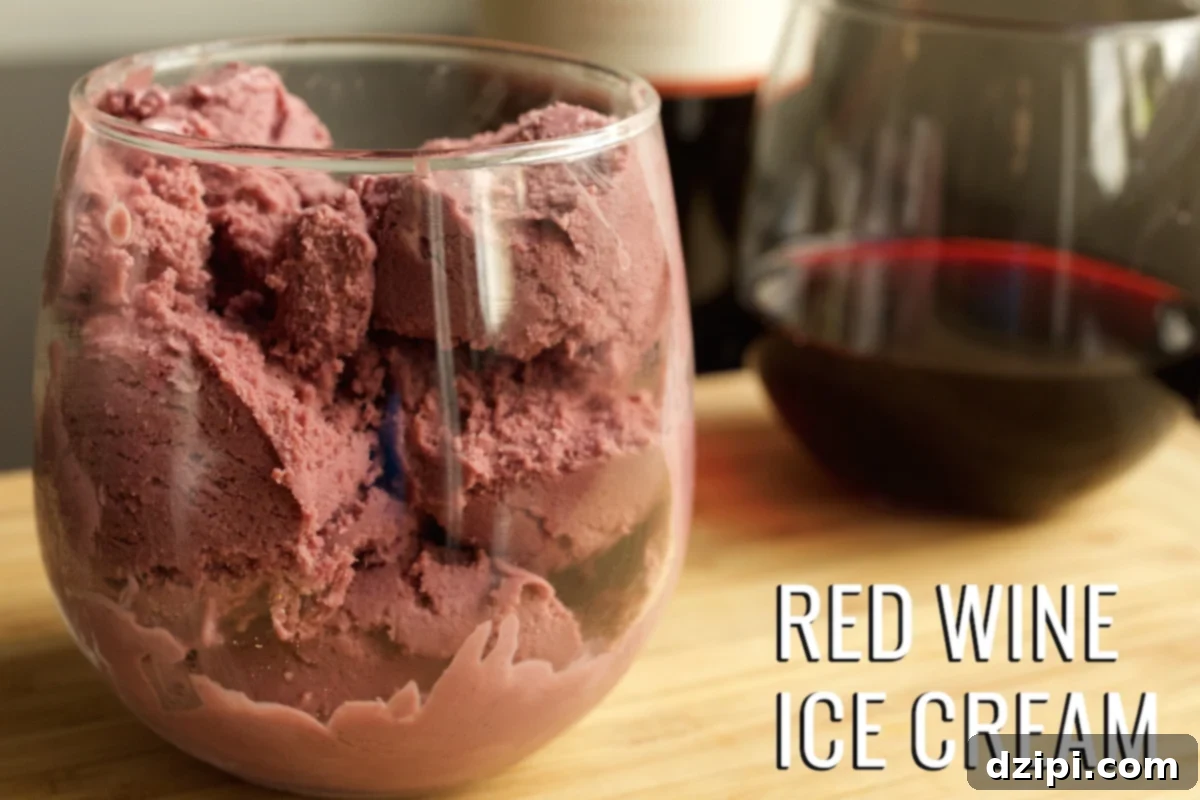
The idea of wine-infused ice cream has always fascinated me, a true epicurean dream. After much anticipation and careful experimentation, I finally brought this concept to life, and the results were absolutely worth the wait! This recipe delivers a perfectly balanced dessert that’s both elegant and incredibly satisfying. We’ll guide you through each step to create this surprisingly easy, yet utterly impressive, treat.
Crafting the Perfect Flavor Profile: Merlot and Vanilla Bean
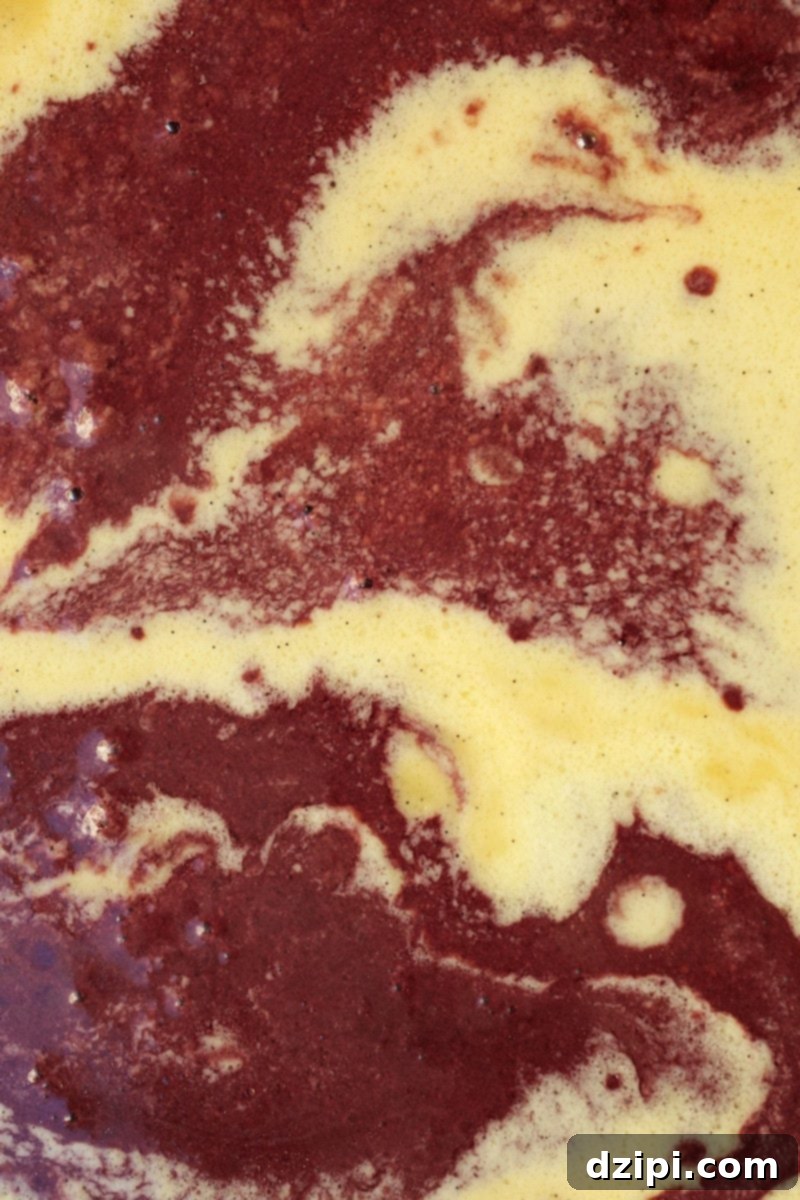
For this exquisite recipe, I chose a smooth Merlot, known for its soft tannins and fruit-forward notes, which beautifully complements the creamy base. The star of the show, beyond the wine, is a fresh vanilla bean. Its aromatic caviar infuses the cream with an unparalleled depth that vanilla extract simply cannot replicate. The first bite reveals a luxurious creaminess, followed by a delightful sweetness, and then, a distinctive, sophisticated tang from the wine emerges, leaving a memorable finish on your palate.
The reduction of the red wine is a critical step, as it concentrates its flavor and cooks off most of the alcohol, ensuring the ice cream freezes properly and delivers a rich, intense wine essence. This careful balance of flavors and textures is what makes this red wine ice cream a truly gourmet experience.
The Journey from Wine to Wonderland: Making Your Own Wine Ice Cream
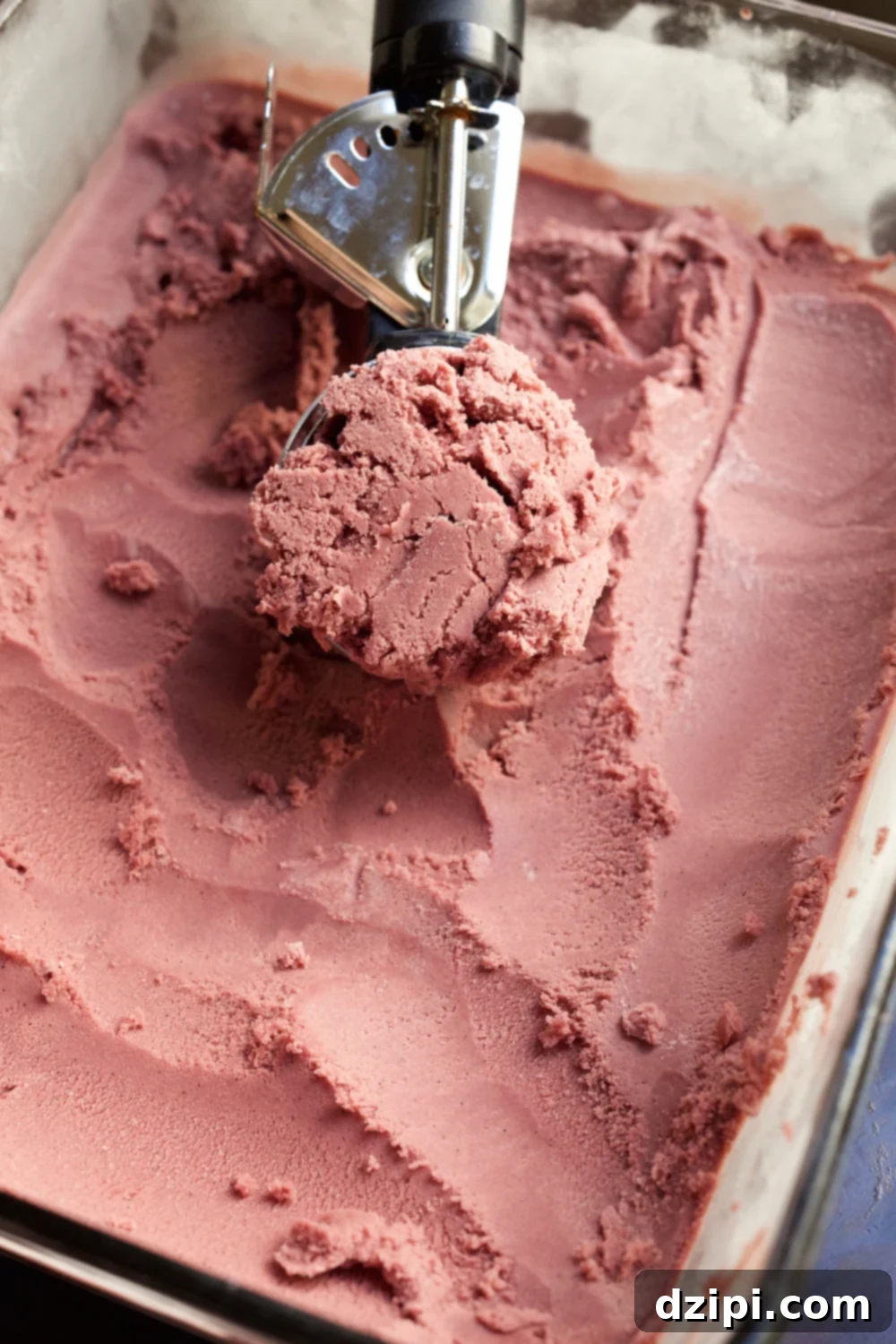
Making homemade ice cream might sound daunting, but with the right steps, it’s a rewarding process. Our recipe breaks down the creation of this unique dessert into simple, manageable stages. From reducing the wine to crafting a silky custard base, each step is designed to ensure a perfect, creamy result. The inclusion of heavy whipping cream and half & half creates an incredibly rich and smooth texture, while egg yolks provide the necessary emulsification and body, preventing an icy consistency. It’s a delicate dance of flavors and temperatures that culminates in pure frozen bliss.
I genuinely enjoyed every spoonful of this Merlot-based creation, and it immediately sparked numerous ideas for future variations. Imagine the possibilities: swirling in fresh, seasonal fruits like blackberries or raspberries would enhance the wine’s natural fruit notes. A robust Cabernet Sauvignon could pair wonderfully with dark chocolate shavings, while a lighter Pinot Noir might be elevated by a hint of cherry. This particular Merlot version, for example, would have been absolutely divine with a handful of fresh, juicy blackberries folded in or served on top.
Elevating Your Dessert Experience: The Wine Ice Cream Sundae
Exciting Update! Since first sharing this delightful red wine ice cream recipe, I’ve taken it to an entirely new level with an elaborate Wine Ice Cream Sundae. This extraordinary creation transforms the simple scoop into a true masterpiece. Picture this: a generous serving of our homemade red wine ice cream, generously topped with fluffy vanilla bean whipped cream, drizzled with a rich, spiced red wine syrup, and garnished with delicate, crunchy lavender almonds. It’s a symphony of flavors and textures – truly heavenly!
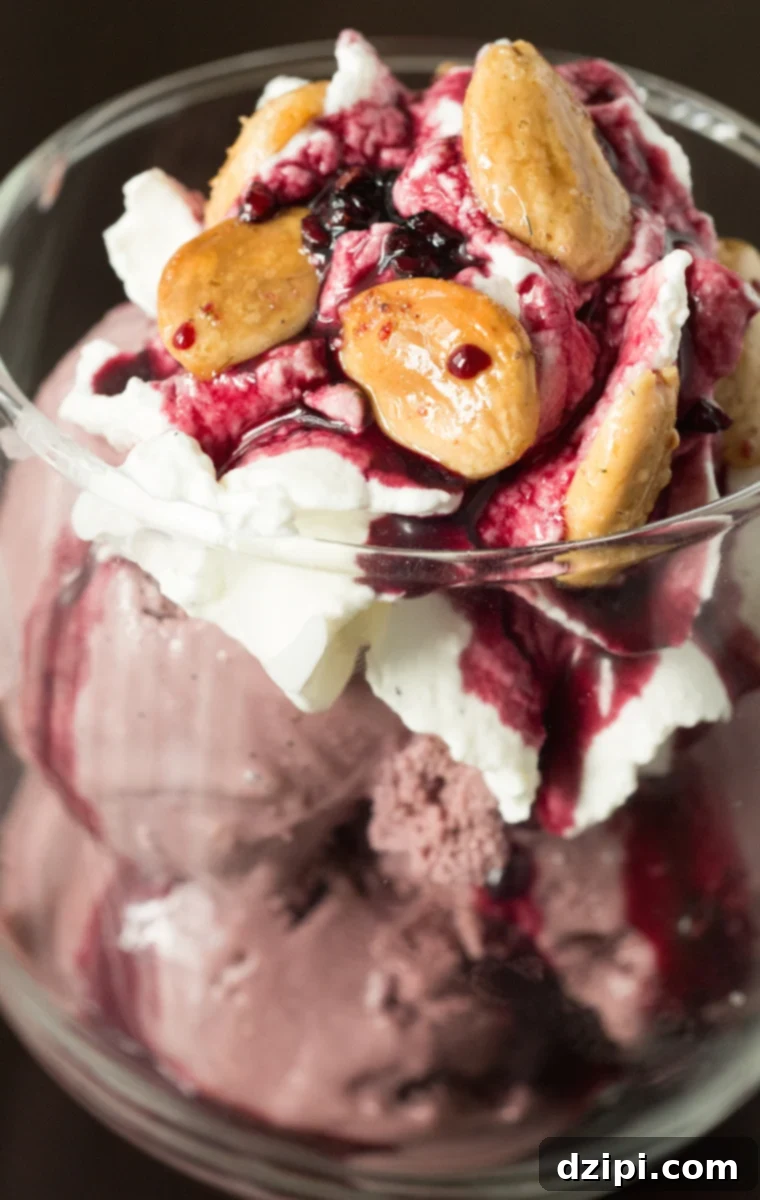
I cannot recommend making this sundae enough. It’s perfect for special occasions, romantic evenings, or simply when you want to treat yourself to something truly spectacular. The spiced red wine syrup intensifies the wine flavor, while the lavender almonds add an unexpected floral note and a delightful crunch, perfectly complementing the creamy ice cream and vanilla whipped cream. This sundae isn’t just a dessert; it’s an experience!
Choosing the Best Red Wine for Your Ice Cream
While I opted for a Merlot in this recipe, the beauty of homemade wine ice cream lies in its adaptability. When selecting your red wine, consider its inherent sweetness and fruitiness. Wines with strong berry notes, like Zinfandel or Grenache, can yield a wonderfully vibrant ice cream. For a deeper, more robust flavor, a Cabernet Sauvignon or Syrah (Shiraz) might be your preference, though be mindful of their tannins. The key is to choose a wine you enjoy drinking, as its character will shine through. You don’t need an expensive bottle; an affordable yet flavorful option works perfectly, especially since the wine will be reduced and its flavors concentrated.
The Science of Deliciousness: Key Ingredients Explained
- Red Wine: The cornerstone of our recipe. Reducing the wine isn’t just about concentrating flavor; it also cooks off the alcohol, which is crucial for the ice cream to freeze properly. Too much alcohol will result in a soft, slushy texture.
- Vanilla Bean: The rich, complex aroma and taste of a fresh vanilla bean are irreplaceable. Scrape out the tiny seeds (caviar) for maximum flavor infusion into the cream base.
- Heavy Whipping Cream & Half & Half: This dairy duo provides the essential fat content for a smooth, creamy, and decadent ice cream texture. The higher fat content prevents ice crystals from forming, ensuring a velvety mouthfeel.
- Brown Sugar: Adds a caramel-like sweetness that complements the red wine beautifully, balancing its acidity and adding depth.
- Egg Yolks: These are vital for creating a rich, stable custard base. They act as an emulsifier, binding the ingredients together, and contributing to the ice cream’s luxurious body and smooth finish. Tempering them correctly is key to avoiding scrambled eggs!
This post contains affiliate links (when you buy we make a little money at no cost to you). See our disclosure for more information.
Red Wine Ice Cream Recipe
★
★
★
★
Print Recipe
10 mins
30 mins
5
Ingredients
- 1 bottle of red wine (Merlot recommended)
- 2/3 cup brown sugar
- 2 cups heavy whipping cream
- 1 cup half & half
- 4 egg yolks
- 1 vanilla bean
Instructions
- The crucial first step in making our wine ice cream is to reduce the red wine. Pour the entire bottle of red wine into a large pot. Simmer it over low to medium heat, allowing it to reduce until you have approximately one cup of a thickened, syrupy liquid. This process can take about an hour, so keep a close eye on it to prevent over-reduction. Once reduced, set it aside to cool.
- In a separate medium pot, whisk together the brown sugar and heavy whipping cream. Carefully slice your vanilla bean lengthwise and scrape out all the beautiful, fragrant vanilla caviar into the pot. Add the scraped bean pod to the pot as well for maximum flavor extraction.
- Stir the cream mixture constantly while cooking it over medium heat. Continue stirring until it begins to steam gently, but make sure to remove it from the heat before it reaches a rolling boil.
- While the cream mixture is heating, beat your egg yolks in a separate bowl until they are light in color and slightly fluffy. Remove the vanilla bean pod from the warmed cream. Then, very slowly, and while whisking continuously, gradually add a small amount of the warm cream mixture into the egg yolks. This process, known as tempering, is vital to prevent the eggs from curdling. Once tempered, gradually incorporate the remaining warm cream into the egg yolk mixture.
- Pour the combined cream and egg mixture back into the pot. Cook over medium heat, stirring constantly, until it thickens into a luxurious custard. You’ll know it’s ready when it coats the back of a wooden spoon and leaves a clear path when you draw your finger across it. Remove the pot from the heat immediately.
- Carefully pour the custard mixture through a fine-mesh strainer and into a large bowl. This step ensures a silky-smooth texture by removing any small bits of cooked egg or vanilla bean. Stir in the half & half and the previously reduced red wine syrup until thoroughly combined.
- Chill the ice cream base thoroughly in the refrigerator for at least one to two hours, or until it is completely cold. This chilling step is essential for proper churning. Once chilled, transfer the mixture to your ice cream maker (I use this Cuisinart model) and freeze according to the manufacturer’s instructions. This typically takes about 30 minutes. If you prefer a firmer ice cream, transfer it to an airtight container and place it in the freezer for a few more hours to harden.
- Finally, sit back, relax, and serve yourself a generous scoop of your homemade Red Wine Ice Cream. For the ultimate indulgence, consider serving it alongside a small glass of the same red wine you used to make it. Enjoy!
Nutrition
Calories:
534
kcal
(27% DV)
Tips for a Perfect Red Wine Ice Cream Experience
- Don’t Skimp on Chilling: Ensure your ice cream base is thoroughly chilled before churning. A colder base leads to a smoother, creamier ice cream.
- Quality Over Price: While you don’t need a vintage bottle, choose a red wine that you genuinely enjoy the taste of. Its flavor will be concentrated in the ice cream.
- Store Properly: Once churned, transfer the ice cream to an airtight container. Press a piece of parchment paper or plastic wrap directly onto the surface to prevent ice crystals and freezer burn.
- Experiment with Garnishes: Beyond the sundae toppings, consider a sprinkle of cocoa powder, a handful of toasted nuts, or a simple fresh mint leaf to elevate your serving.
Beyond the Scoop: Creative Serving Ideas
Red wine ice cream is incredibly versatile! Serve it in elegant chilled glasses, perhaps alongside a small pour of the same wine used in the recipe. It makes an excellent accompaniment to other desserts too; try a scoop with a slice of rich chocolate cake, a warm brownie, or a delicate panna cotta. For an unforgettable party treat, offer small scoops as an intermezzo between courses. The possibilities are endless when you embrace this unique and sophisticated dessert.