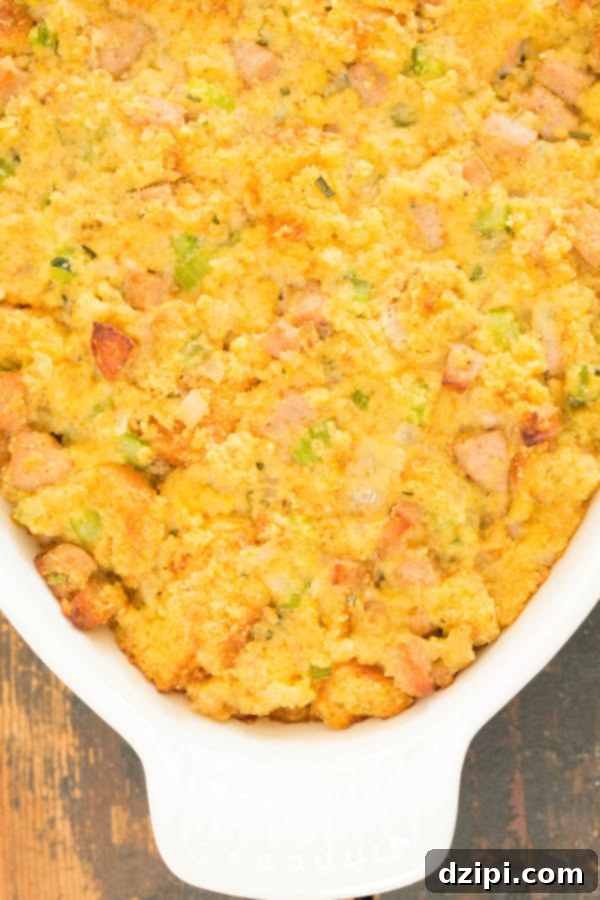
The Ultimate Southern Cornbread Stuffing with Smoked Sausage: A Thanksgiving Tradition
Prepare for your Thanksgiving dinner to be unforgettable with this classic Southern Cornbread Stuffing featuring savory smoked sausage. Boasting a perfectly crisp exterior and a moist, deeply flavorful interior, this homemade stuffing recipe is poised to become the star of your holiday table. Forget about bland, dry, or overly complicated side dishes; this robust and hearty stuffing offers a taste of true Southern comfort that will leave everyone craving more.
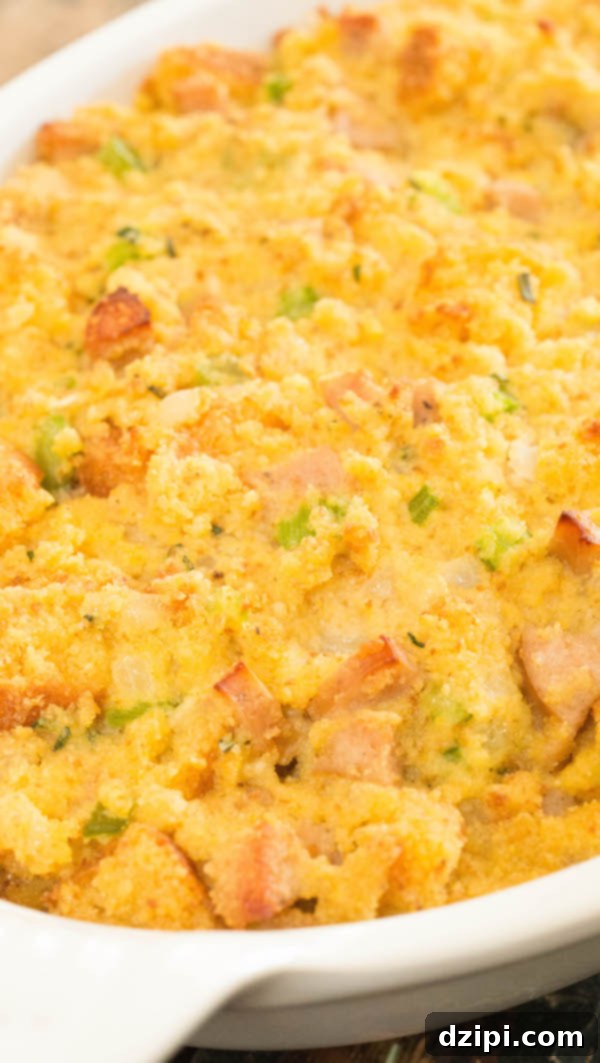
For years, I was convinced that stuffing simply wasn’t for me. Store-bought mixes often tasted artificial, and even some homemade versions lacked that special touch. That was until this incredible smoked sausage and cornbread stuffing came into my life, utterly transforming my perception of what this beloved side dish could be. The moment you experience the rich textures and unparalleled flavors of truly homemade stuffing, you’ll understand why the pre-packaged alternative simply can’t compare. It’s an experience that’s surprisingly easy to achieve, yielding a dish that tastes like pure culinary mastery.
Beyond its incredible taste, this cornbread stuffing embodies the spirit of Southern hospitality and tradition. It’s a dish that brings people together, evoking memories of cherished family gatherings and festive holiday celebrations. Whether you’re hosting your first Thanksgiving or are a seasoned pro, this recipe provides a foolproof way to impress your guests and add a truly authentic touch to your festive feast.
Stuffing vs. Dressing: Unraveling the Culinary Debate
The terms “stuffing” and “dressing” are often used interchangeably, particularly in modern American culinary language. However, there’s a subtle, traditional distinction. Technically, stuffing refers to the mixture cooked inside the cavity of the turkey, absorbing its juices and flavors as it bakes. Dressing, on the other hand, is the same flavorful mixture baked separately in a casserole dish outside of the bird. While many still refer to any bread-based side dish for Thanksgiving as “stuffing,” understanding this traditional difference can add a layer of appreciation for culinary history.
Regardless of what you call it, the goal remains the same: to create a wonderfully savory, aromatic, and comforting side that complements the main course beautifully. This recipe, whether you refer to it as “cornbread stuffing” or “cornbread dressing,” delivers on that promise with every spoonful.
Prioritizing Safety: Why Baking Stuffing Separately is Best
You might be wondering why the practice of cooking stuffing inside the turkey has largely fallen out of favor. The primary reason is a crucial one: food safety. When stuffing is packed into the turkey’s cavity, it creates a dense mass that takes longer to reach a safe internal temperature. As the turkey cooks, its juices seep into the stuffing, potentially introducing bacteria like salmonella. To ensure the center of the stuffing reaches the recommended 165°F (74°C) without undercooking, you would often have to severely overcook the turkey itself, resulting in dry, tough meat.
Baking your stuffing in a separate casserole dish eliminates this risk entirely, allowing both the turkey and the stuffing to cook perfectly. This method ensures your holiday meal is not only delicious but also completely safe for everyone to enjoy without worry. Plus, cooking it separately means you can achieve that coveted crispy top layer, a textural delight often missed when baked inside the bird.
Essential Ingredients for the Perfect Cornbread and Sausage Stuffing
The magic of this Southern cornbread stuffing lies in its carefully selected, high-quality ingredients. Each component plays a vital role in building the layers of flavor that make this dish truly special. Here’s a closer look at what you’ll need to create this culinary masterpiece:
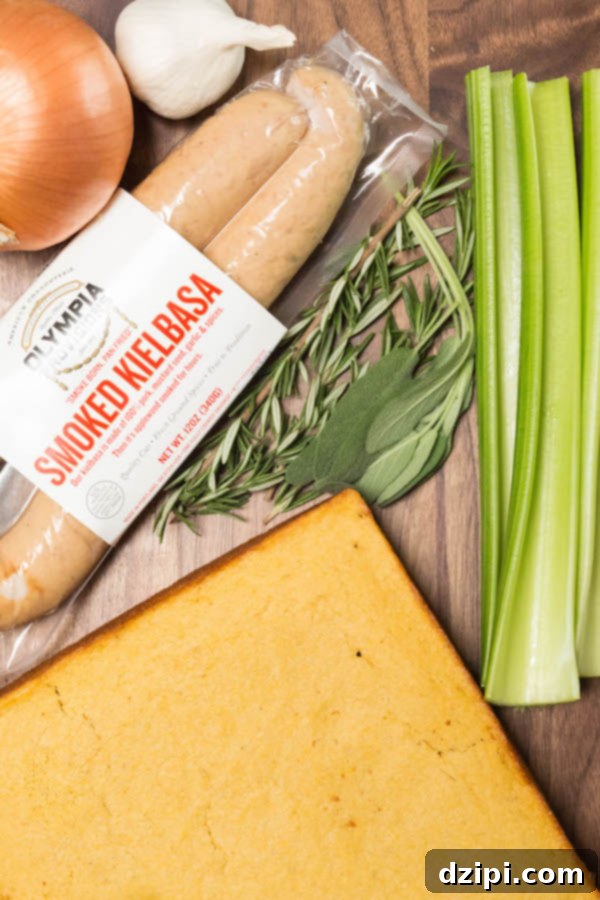
- Stale Cornbread: This is arguably the most critical ingredient. Whether you opt for homemade or store-bought, ensure your cornbread is truly stale. Fresh cornbread will turn mushy when liquid is added, resulting in a dense, gluey stuffing. Cutting your cornbread into cubes and leaving it out to air-dry for at least 2-4 days in advance is ideal. This allows the bread to firm up, absorb the rich liquids, and maintain its structure, contributing to the perfect texture. For a more traditional Southern flavor, choose a less sweet or savory cornbread.
- Smoked Kielbasa Sausage: The smoked sausage provides an incredible depth of flavor and a satisfying heartiness to the stuffing. Smoked kielbasa is an excellent choice for its distinct smoky, garlicky notes and firm texture. Brands like Olympia Provisions or Conecuh are highly recommended, but any quality smoked sausage will work wonderfully. You can also experiment with other smoked sausages like Andouille for a spicier kick or a mild breakfast sausage for a different profile. Be sure to dice it into small, uniform pieces for even distribution.
- Yellow Onion: A cornerstone of many savory dishes, yellow onion provides a sweet, aromatic base when sautéed. Its subtle sweetness perfectly balances the richness of the sausage and cornbread. While yellow onion is preferred, a white onion can be used as a substitute if that’s what you have on hand. Dice it finely to ensure it softens beautifully and melds into the stuffing without overpowering it.
- Fresh Garlic: Freshly minced garlic adds an indispensable pungent aroma and robust flavor. Avoid garlic powder for this recipe, as fresh garlic contributes a vibrant, authentic taste that dry alternatives cannot replicate. Minced garlic also releases its essential oils more effectively when sautéed, infusing the entire dish with its wonderful essence.
- Fresh Herbs (Sage and Rosemary): Herbs are non-negotiable for traditional stuffing, infusing it with that quintessential holiday aroma and taste. Fresh sage offers an earthy, slightly peppery flavor, while fresh rosemary provides a piney, fragrant note. The combination is simply magical. Dried herbs, while convenient, lack the bright, complex flavors of their fresh counterparts and are not recommended for this recipe. Mince them finely to distribute their flavors evenly.
- Celery: Offering a delightful crunch and a subtly bitter, refreshing flavor, celery is another essential aromatic. Three medium-sized stalks, diced, provide the perfect amount of textural contrast and a classic savory element. Choose fresh, crisp celery for the best results.
- Chicken Stock: Chicken stock is the liquid medium that brings all the ingredients together, moistening the cornbread and infusing the entire dish with savory chicken flavor. It effectively replicates the moisture and richness that stuffing would absorb if cooked inside a turkey. Start with the recommended amount and add more gradually to achieve the desired consistency, ensuring the stuffing is moist but not soggy. High-quality chicken stock or even homemade turkey stock will significantly elevate the flavor.
- Butter: A touch of butter is used to sauté the aromatics and sausage, adding a rich, creamy base that enhances all the other flavors.
Expert Tips for Crafting the Best Cornbread Stuffing
Achieving the perfect cornbread stuffing is all about technique and a few key considerations. Follow these tips to ensure your dish is a resounding success:
- The Staleness Factor is Key: As mentioned, really stale cornbread is paramount. If your bread is too fresh, it will absorb too much liquid and turn into a dense, unappetizing mass. Cutting your cornbread into 1-inch cubes and letting it air dry on a baking sheet at room temperature for at least 2-4 days, or even gently toasting it in a low oven, will help achieve the ideal texture. This crucial step allows the bread to develop a firmness that will hold up beautifully when mixed with the other ingredients and liquids.
- Moisture Control is Crucial: When adding the chicken stock, do so gradually. Start with the minimum recommended amount and mix gently. The goal is for the cornbread cubes to be thoroughly moistened but not saturated or swimming in liquid. You want the stuffing to hold together but still have individual pieces of cornbread visible. A soggy stuffing will result in a heavy, undesirable texture, while too little moisture will yield a dry, crumbly dish. Adjust by adding stock in half-cup increments until the perfect balance is struck.
- Don’t Overmix: Once the liquid is added, mix the stuffing just enough to combine the ingredients. Overmixing can break down the cornbread cubes, leading to a mushy texture. Use a gentle folding motion.
- Proper Sautéing: Take your time to properly sauté the onions, celery, and sausage until they are tender and slightly caramelized. This step develops deep foundational flavors that are essential to the stuffing’s overall taste.
- Crispy Top: For that delightful crispy top, consider baking the stuffing uncovered for the last 10-15 minutes of cooking. If it’s browning too quickly, you can loosely tent it with foil.
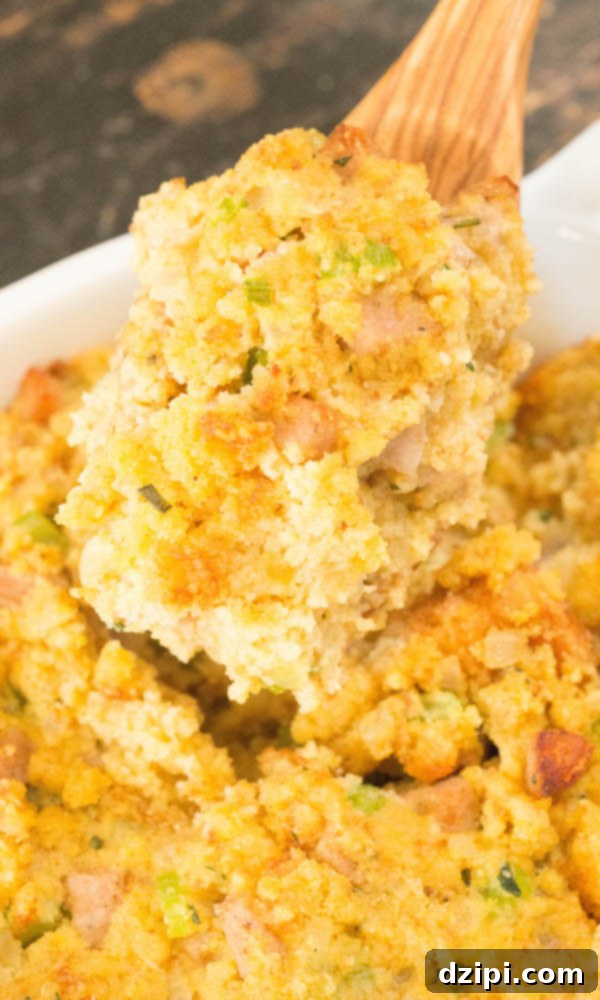
Frequently Asked Questions About Cornbread Stuffing
Is this cornbread stuffing sweet?
The inherent sweetness of cornbread can vary significantly depending on the recipe or brand you use. However, in this stuffing recipe, the savory notes from the smoked sausage, aromatic vegetables, and rich chicken broth work together to create an overall balanced and savory dish. While there might be a subtle hint of sweetness from the cornbread, it is beautifully complemented and grounded by the robust, earthy flavors of the other ingredients, ensuring a predominantly savory profile that is perfect for a holiday meal.
Can this cornbread stuffing be made ahead of time?
Yes, this stuffing is an excellent candidate for make-ahead preparation, which can be a huge time-saver during busy holiday cooking. You have a couple of safe and effective options:
- Prepare Wet and Dry Ingredients Separately: You can cook the sausage and vegetables, allow them to cool completely, and store them in an airtight container in the refrigerator for up to 2-3 days. Cube your stale cornbread and store it at room temperature. On baking day, simply combine the wet and dry mixtures, add the chicken stock, and proceed with baking.
- Assemble and Refrigerate Unbaked: You can assemble the entire stuffing mixture (without baking) up to 1-2 days in advance. Transfer it to your casserole dish, cover it tightly with plastic wrap or a lid, and refrigerate. When ready to bake, allow it to come to room temperature for about 30 minutes before baking according to the recipe instructions, potentially adding 5-10 minutes to the cook time.
- Cook and Reheat: You can fully bake the cornbread stuffing, let it cool, then cover it tightly and refrigerate for up to 3-4 days. For reheating, follow the instructions provided below to ensure it heats through evenly and the top crisps up nicely.
Can it be frozen?
Yes, cornbread stuffing freezes remarkably well! After baking and allowing it to cool completely, transfer the stuffing to an airtight, freezer-safe container or wrap it tightly in aluminum foil and then in plastic wrap. It can be frozen for up to 2-3 months. When you’re ready to enjoy it, thaw it overnight in the refrigerator before reheating.
How to Reheat Your Cornbread Stuffing
To ensure your leftover cornbread stuffing is as delicious as when it was first baked, follow these reheating guidelines:
- Bring to Room Temperature: First, remove the stuffing from the refrigerator and let it sit at room temperature for about 30 minutes to an hour. This step is crucial for even heating, preventing the center from remaining cold while the edges overcook.
- Preheat Oven: Preheat your oven to 350°F (175°C).
- Cover and Bake: Place the stuffing, preferably in a casserole dish with a lid or tightly covered with foil, into the preheated oven. Bake for approximately 20-25 minutes. Covering helps retain moisture and ensures the stuffing heats through without drying out.
- Uncover and Crisp: After 20-25 minutes, remove the covering. Continue baking for another 10-15 minutes, or until the top is beautifully golden brown and crispy. This step is key to bringing back that delightful textural contrast.
- Serve: Once heated through and crispy, remove from the oven and serve immediately.
Perfect Pairings: What to Serve with Your Cornbread Stuffing
This savory smoked sausage cornbread stuffing is a versatile side dish that complements a wide array of holiday favorites. While it’s certainly hearty enough to stand on its own, here are some recommended pairings to create a truly spectacular holiday spread:
- The Main Event: It’s a natural partner for any holiday bird. Consider serving it alongside a flavorful Cajun Turkey for an extra kick, or a classic roasted turkey or ham.
- Sweet Potato Delights: The rich, earthy flavors of the stuffing are beautifully balanced by the sweetness of Thanksgiving Sweet Potatoes. The contrast in flavors and textures creates a harmonious plate.
- Fruity Accents: For a touch of tangy sweetness, pair it with Copycat Cracker Barrel Fried Apples. The apples offer a refreshing counterpoint to the savory stuffing.
- Green Bean Casserole: A classic green bean casserole provides a comforting vegetable component that always belongs on a holiday table.
- Cranberry Sauce: The tartness of homemade cranberry sauce offers a refreshing palate cleanser that beautifully cuts through the richness of the stuffing and other holiday dishes.
- Gravy: Don’t forget a generous ladle of rich, homemade gravy over your stuffing for an extra layer of moisture and flavor.
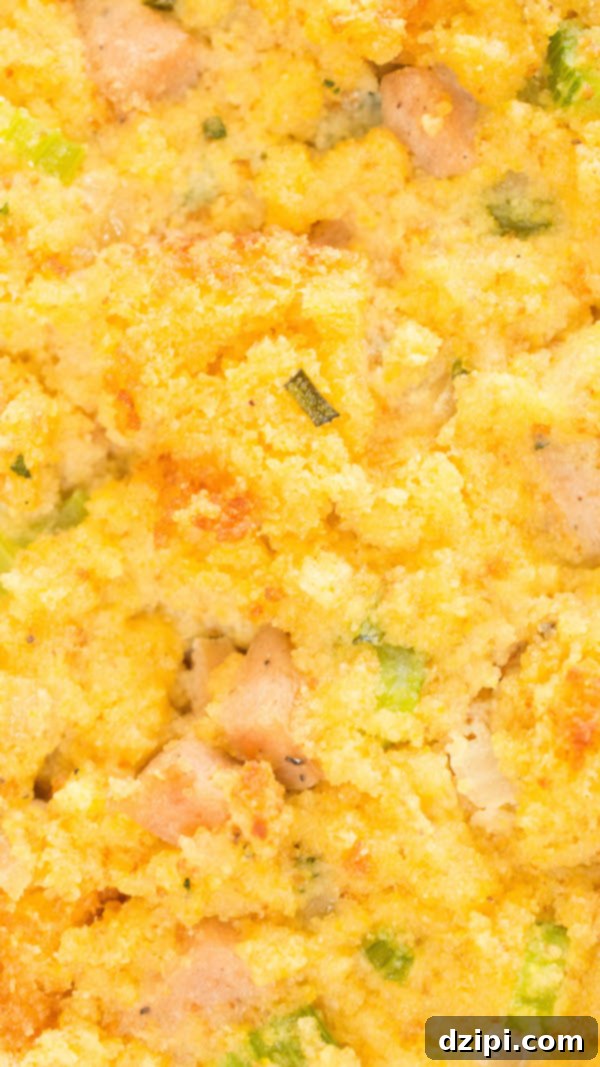
Classic Southern Cornbread Stuffing with Smoked Sausage
This recipe yields a classic Southern cornbread stuffing, perfectly crisp on the outside and wonderfully moist on the inside, infused with the savory flavor of smoked sausage. It’s the ideal addition to any holiday feast.
Prep Time: 15 mins
Cook Time: 35 mins
Servings: 10

Ingredients
- 1 Tbsp Butter
- 1 Large Yellow Onion, diced
- 3 Stalks of Celery, diced
- Salt, to taste
- 12 oz Smoked Kielbasa Sausage, diced
- 3 Cloves of Garlic, minced
- 6 Fresh Sage Leaves, minced
- 3 Sprigs of Fresh Rosemary, minced
- 8 Cups of Stale Cornbread, cut into 1-inch cubes
- 2-3 Cups of Chicken Stock (start with 2 cups and add more as needed)
Instructions
- Preheat your oven to 350°F (175°C).
- In a large skillet, melt the butter over medium heat. Add the diced onions and celery along with a pinch of salt. Sauté for several minutes, stirring occasionally, until the vegetables become aromatic and begin to soften, about 5-7 minutes.
- Add the diced smoked sausage to the skillet with the vegetables. Sauté for 5-7 minutes, stirring until the sausage starts to brown and develop a nice crust.
- Stir in the minced fresh garlic and cook for just one more minute until fragrant, being careful not to burn the garlic.
- Add the minced fresh sage and rosemary to the skillet. Cook for another 1-2 minutes to release their essential oils and aromas. Remove the skillet from the heat.
- In a very large mixing bowl, combine the cubed stale cornbread and the sautéed vegetable and sausage mixture. Toss gently to distribute.
- Gradually add the chicken stock. Start with 1.5 cups and gently mix the ingredients together using a spatula or your hands. Add additional chicken stock in half-cup increments until the desired consistency is reached. The cornbread should be moist and absorb the liquid, but not soggy or swimming in broth. It should hold together when pressed lightly.
- Transfer the prepared stuffing mixture into an oven-safe casserole dish. Spread it evenly.
- Bake in the preheated oven for 30-35 minutes, or until the stuffing is cooked through, heated to an internal temperature of 165°F (74°C), and the top is golden brown and delightfully crispy.
- Serve hot and enjoy this comforting Southern classic!
Nutrition
Calories: 220 kcal (11% Daily Value)
Author: Jessica Pinney
Did you make this recipe? Please tag @cookingwithjanica on Instagram! We’d love to see!
This Southern Cornbread Stuffing with Smoked Sausage is more than just a side dish; it’s a celebration of flavor, tradition, and togetherness. Its comforting aroma filling your kitchen will instantly signal the start of a joyous holiday meal. We encourage you to try this recipe and make it a cherished part of your own family traditions. Happy cooking!